

Moses' Footsteps
T he footsteps of Moses were the shadow of those of the Lord Jesus. Moses, as God's faithful servant in the Old Testament, delivered the children of Israel from 400 years of slavery to Pharaoh in Egypt (Gen. 15:13-14). This points to Jesus Christ, as the Son of God, who redeemed all mankind from the captivity of the sins of the devil, Satan (Heb. 3:5-6).
God's Promises to Abraham's Descendants
Then He said to Abram: “Know certainly that your descendants will be strangers in a land that is not theirs, and will serve them, and they will afflict them four hundred years. And also the nation whom they serve I will judge; afterward they shall come out with great possessions.
- Genesis 15:13-14

Abraham's grandson Jacob and his family went to Egypt because of a famine and took refuge with Joseph, his son who was the prime minister (Acts 7:8-11). They lived in the land of Goshen and multiplied greatly (Exod. 1:1, 5-7). After Joseph died, the new king of Egypt began to mistreat the Israelites (Exod. 1:8, 13-14) and ordered the killing of all born male Israelites (Exod. 1:16, 22). God did not forget His covenant with Abraham and His promise to him to deliver his descendants from slavery (Gen. 15:13-14). The day of God's deliverance of the children of Israel from Egypt was exactly 430 years (Exod. 12:40-41). The slavery of the children of Israel in Egypt foreshadowed the slavery of mankind to sin (Rom. 5:12). God called His servant Moses to free His people from slavery, foretelling the redemption of the Lord Jesus to save all mankind (John 3:16-17).

When Pharaoh ordered the killing of Jewish babies (Exod. 1:16), the parents hid the newborn Moses for three months, then placed him in a painted bulrushes box among the reeds by the Nile (Exod. 2:2-3). When Pharaoh's daughter saw the child, she adopted him and named him Moses (Exod. 2:5-6, 10). Moses lived for 120 years (Deut. 34:7). He spent 40 years studying in the royal palace of Egypt (Acts 7:22-24), 40 years of training as a shepherd in the wilderness (Acts 7:30), and 40 years of being called to lead the Israelites to walk with God (Deut. 29:5). When the time promised to Abraham had come, God called Moses from the bush of fire (Exod. 3:2,5-6) and reaffirmed His covenant with Abraham to deliver the people from slavery (Exod. 6:2-6). Moses was a shadow of Jesus, foretelling the coming of the Lord Jesus to redeem God's people from the slavery of sin (Matt. 1:21; Luke 1:4).
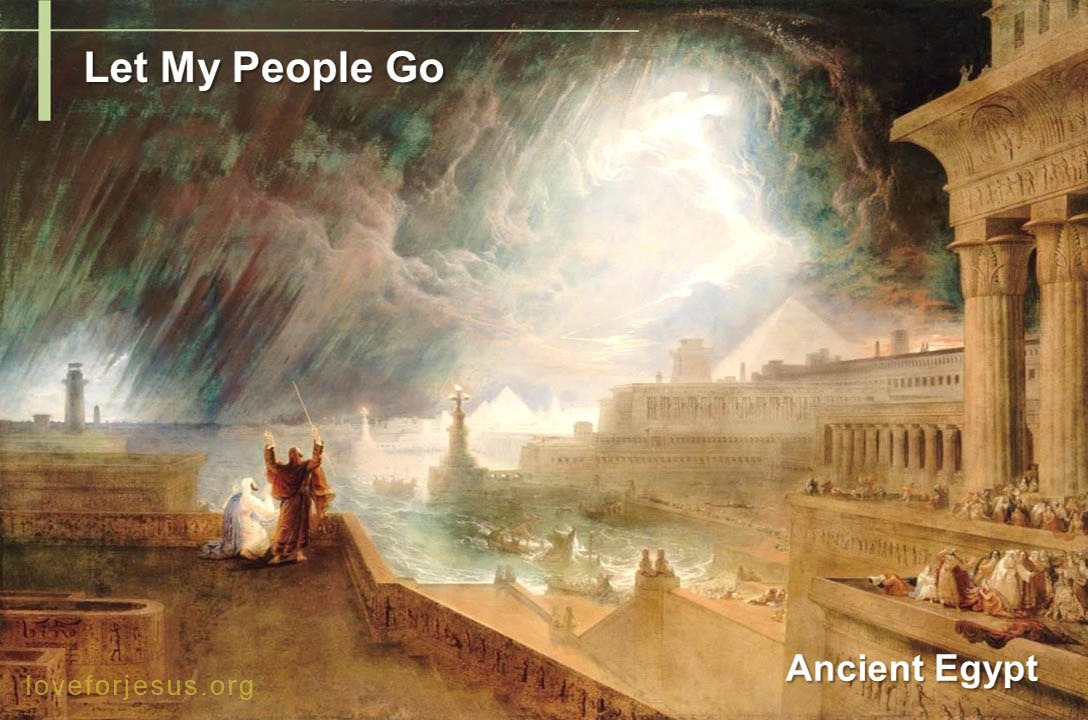
God asked Moses and his brother Aaron to tell Pharaoh to let His people go on a three-day journey into the desert to sacrifice to God (Exod. 5:1-3). Pharaoh refused and mistreated the Israelites (Exod. 5:6-9). God asked Moses to warn Pharaoh (Exod. 4:22-23), but Pharaoh refused to let them go (Exod. 7:13). God then sent 10 plagues on the land of Egypt to force Pharaoh to release the people and judge the Egyptian gods (Exod. 11:1-3; 12:12). The place of the Jews was not affected (Exod. 8:22;9 :26). The ten plagues ranged from minor to severe, from water turning to blood, frogs, lice, flies, livestock pestilence, boils, hail, locusts, darkness, to the death of the firstborn. Pharaoh was given repeated opportunities to repent, but he refused until he lost his son and urged the Israelites to leave (Exod. 12:29-33). The ten plagues of Egypt foreshadow the final judgment when Jesus returns.

God told Moses to warn Pharaoh of the final plague (Exod. 11:4-8) and then told him to make this month the first month of the year (Exod. 12:1-2). God told the Israelites to prepare lambs on the 10th day of that month, keep them until the 14th, then kill them at twilight, and mark the doorframe with the lamb’s blood so that the angel of death would pass over them when he killed the firstborn son of Egypt that night (Exod. 12:3, 6-7, 12-13). God told them to eat roasted lamb that night with bitter herbs and unleavened bread for 7 days (Exod. 12:8, 15). God designated the 14th day of the first month from twilight as the Passover, and the 15th day of the same month as the Feast of Unleavened Bread for 7 days (Lev. 23:5-6). The Passover lamb foreshadowed the crucifixion of Jesus. History tells us that Jesus was the scapegoat for mankind (John 1:29) and was crucified on the Passover (1 Cor. 5:7). The blood of the Lamb protected the Israelites, signifying that only the blood of Jesus can save.

On the night the firstborn sons of Egypt were killed, Pharaoh and the Egyptians urged the Israelites to leave Egypt quickly (Exod. 12:31-33). God led the people through the wilderness of the Red Sea with a pillar of cloud by day and a pillar of fire by night, so that they travelled day and night (Exod. 13:17-18, 21). Pharaoh changed his mind and chased the Israelites to the Red Sea (Exod. 14:5-7,9). When the children of Israel saw Pharaoh pursuing them, they complained against Moses and cried out to God (Exod. 14:10-14). God told Moses to stretch out his staff over the sea, and the Red Sea parted. The Israelites walked on dry land. The Egyptian soldiers chased them down to the Red Sea. God told Moses to stretch out his staff over the sea again, and the water returned, drowning Pharaoh's entire army (Exod. 14:21-23, 26 -28). God performed the miracle at the Red Sea and baptised His people into life (Exod. 14:30-31). This was a shadow of Jesus' death and burial. All who are baptised into Jesus are justified by faith (Rom. 6:3-6).

The Israelites crossed the Red Sea overnight, and landed safely at dawn. They sang songs to praise God for delivering them from the Egyptians and giving them new life (Exod. 15:1-2, 13). The Red Sea was the dividing line between their old and new lives. They were baptised into God (1 Cor. 10:1-2). Moses was a shadow of the Lord Jesus (Heb. 3:5-6). Just as God told Moses to tell Pharaoh three times to let them go three days’ journey to God's appointed place (Exod. 3:18; 5:3; 8:27). From the time they killed the Passover lamb, left Egypt overnight and travelled day and night under God’s pillar of cloud and fire, to the crossing of the Red Sea overnight and landed ashore in the early morning, they foreshadowed Jesus' Passover crucifixion, burial, and resurrection on the third day (Luke 24:7). All who are baptised into the Lord Jesus are brought into His resurrected eternal life (Rom. 6:3-4; Col 2:12) and become a new creation (2 Cor. 5:17).
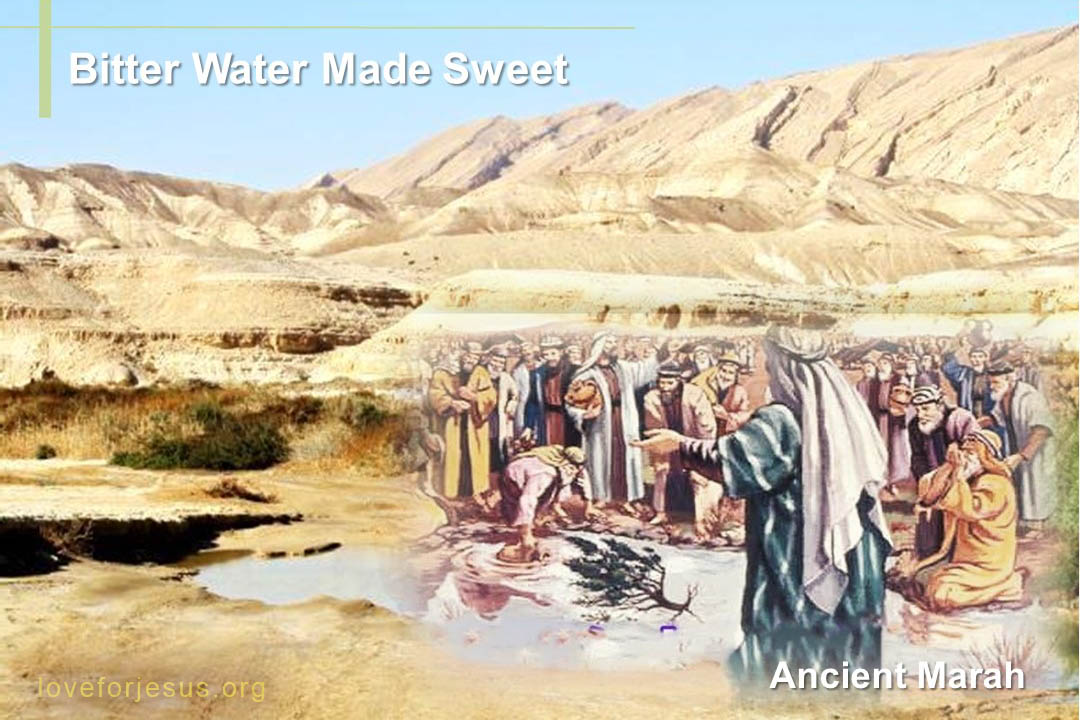
Moses led the children of Israel out of the Red Sea and walked for three days in the wilderness to Marah. The water there was too bitter to drink, so the people complained against Moses (Exod. 15:22-24). God told Moses to throw a tree into the water and the bitter water became sweet (Exod. 15:23-25). This tree, which made the bitter water sweet, was a symbol of the cross of Jesus. It represents the Cross of Jesus as our Tree of Life that makes the bitter waters of our lives sweet (Heb. 12:2). Adam’s Fall caused man and the whole earth to suffer under the power of sin (Rom. 5:12,14; 8:20). Our old life in the flesh is the life in Adam, and our hearts are often filled with bitterness. But through Jesus’ redemption on the cross, we are born again in the Holy Spirit and become a New Creation, receiving a sweet new life in Christ (2 Cor. 5:17). The bitter waters of Marah are transformed by the tree, foreshadow that the bitterness of life is transformed by the grace of Jesus.

The children of Israel travelled from Marah to Elim, where there were 12 springs of water and 70 palm trees (Exod. 15:27). From the bitter waters of Marah to the sweet springs of Elim, we see that God has already prepared the spring of life for our journey of suffering! Although there is suffering in the world, there will be provision and solutions from our God the Father in heaven (Gen. 22:14). Like Moses, Jesus leads us to be baptised into God at the ‘Red Sea’, to walk with Him through the crucifixion at ‘Marah’, and to enter into the living waters of the resurrection life at ‘Elim’ (John 4:14; 7:38). The numbers 7 and 12 represent God’s perfection and completeness. The 12 springs and 70 palm trees symbolise the 12 tribes of Israel and 70 elders (Exod. 24:4; Num. 11:16-17). The 12 apostles and 70 disciples of Jesus (Luke 9:1; 10:1) symbolise the living waters of Jesus’ Salvation (Isa. 12:2-3) and the spiritual laws of God’s kingdom.
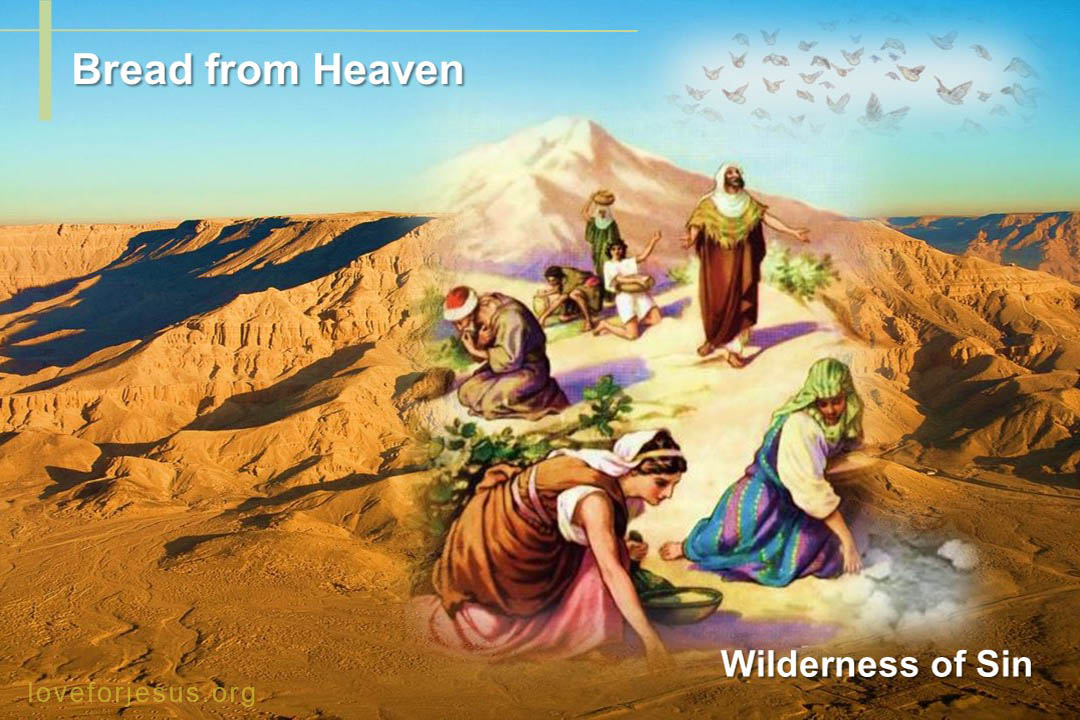
The Israelites left Elim and came into the wilderness of Sin. They complained that there was no food (Exod. 16:1-3). God sent them manna and quails from heaven (Exod. 16:11-14, 31). The manna represents Jesus as the Bread of Life from heaven (John 6:31-33, 51). Jesus said, "I am the bread of life. He who comes to Me shall never hunger, and he who believes in Me shall never thirst.” (John 6:35). Jesus is referring to His sacrificial atonement on the cross for our sins, so that through His resurrection we can have eternal life (John 6:53-57). As children of God, our God the Father provides for us (Phil. 4:19; Psalm 23:1). God provided manna for the children of Israel for 40 years until they reached the Promised Land. Then the manna stopped, they began to eat the produce of the land from the Feast of Firstfruits onwards, symbolising their new beginning (Exod. 16:35; Josh. 5:10 -12).

When the Israelites came to Rephidim from the wilderness of Sin, they complained that there was no water to drink (Exod. 17:1, 3). God told Moses to strike the rock with his rod, and water flowed out for the people to drink (Exod. 17:4-6). The Apostle Paul said that the Israelites in the wilderness "all ate the same spiritual food, and all drank the same spiritual drink. For they drank of that spiritual Rock that followed them, and that Rock was Christ." (1 Cor. 10:3-4). God caused the rock to break open and give water (Isa. 48:21) foreshadowing the crucifixion and shedding of the blood of Jesus Christ. Jesus is our rock, split to give the living water of eternal life, so that whoever accepts His Salvation will have eternal life (John 4:13-14). That is why God only allowed Moses to strike the rock once, and then command it to give water a second time (Num. 20:7-8), because Jesus needed only one sacrifice to sanctify His people forever (Heb. 10: 10,14).

The Israelites left Rephidim and camped at the foot of Mount Sinai (Exod. 19:2), where God made a covenant with His people (Exod. 19:3-6) and gave Moses the Ten Commandments ( Exod. 31:18). Moses stayed on the mountain for 40 days to receive the laws (Exod. 24:17-18). During this time, the people made an idol of a golden calf (Exod. 32:7-8). Moses smashed the tablets of the law in anger (Exodus 32:19) and asked God to forgive their sins. The Israelites repeatedly rebelled against God after they left Egypt (Deut. 9:6-7, 24). The law reminds us of our sins (Rom. 3:20), but humanity is bound by sin (Rom. 5:13; 7:14, 19-20, 22-23). “For what the law could not do in that it was weak through the flesh, God did by sending His own Son in the likeness of sinful flesh, on account of sin: He condemned sin in the flesh, that the righteous requirement of the law might be fulfilled in us who do not walk according to the flesh but according to the Spirit.” (Rom. 8:3-4; 5:19, 21)

The Israelites set out from Mount Hor, but the difficulty of the journey led to their resentment and blasphemy against God and rejection of the food God provided for them (Num. 21:4-5). God allowed fiery serpents to enter the people and the people repented. God told Moses to make a bronze snake and hang it on a pole. Anyone bitten by the snake would live if they looked at the bronze snake (Num. 21:7-9). Jesus told us, “And as Moses lifted up the serpent in the wilderness, even so must the Son of Man be lifted up, that whoever believes in Him should not perish but have eternal life.” (John 3:14-15) Jesus tells us that when He is crucified and risen from the dead, He will draw all people to Himself (John 12:32-33, 35-36). This typifies that anyone who looks to the crucified Jesus will be saved (John 6:40). The Lord Jesus has paved the way for our sins to be forgiven (2 Cor. 5:21), and by His stripes we are healed (1 Peter 2:24).
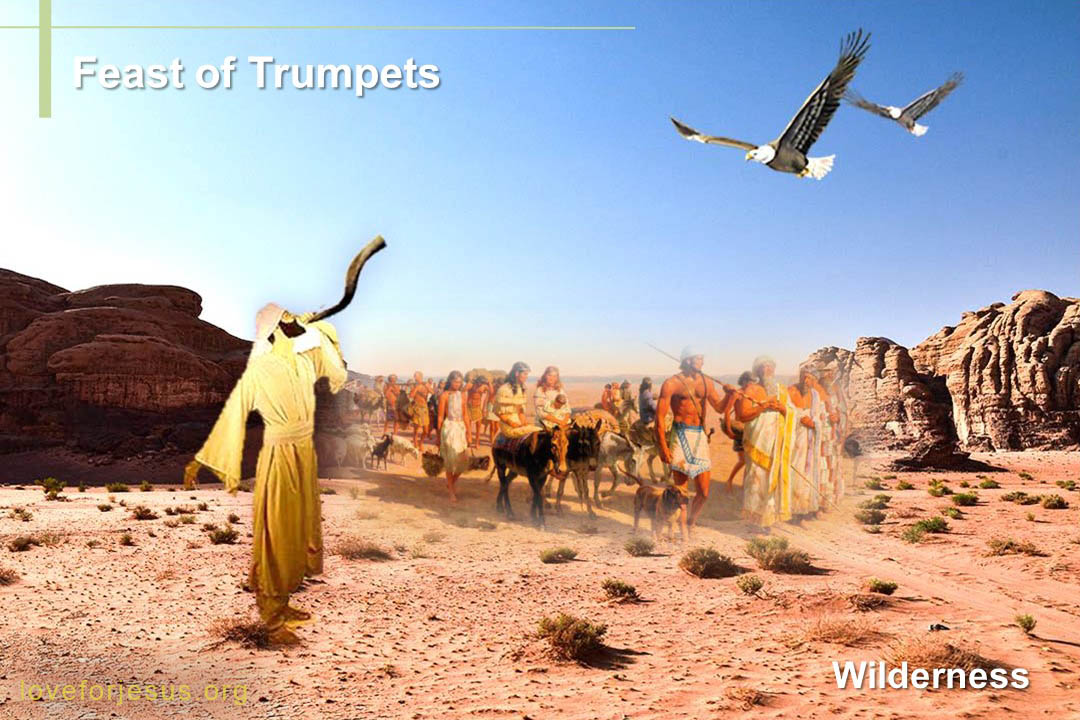
God designated the Feasts of the Lord with the children of Israel as holy convocations (Lev. 23:1-2). God set the first day of the seventh month as a holy Sabbath, a memorial of blowing of trumpets (Lev. 23:24), to gather the people (Num. 10:3) and to prepare for the Day of Atonement (Lev. 25:9), which is ten days later. The Feast of Trumpets typifies the last trumpet when Jesus returns to judge the world and gather God’s people (Matt. 24:30-31). The Seven Feasts of the Lord, ordained by God, conceal God‘s plan of redemption and timetable, foreshadowing Jesus’ Salvation (Col. 2:16-17). God especially emphasised that the Passover (Crucifixion), the Feast of Firstfruits (Resurrection), the Feast of Pentecost (Holy Spirit), the Day of Atonement (Judgment) and the Feast of Tabernacles (Marriage Supper of the Lamb), should be a statute forever for all generations (Exod. 12:14; Lev. 23:14, 21, 31, 41)
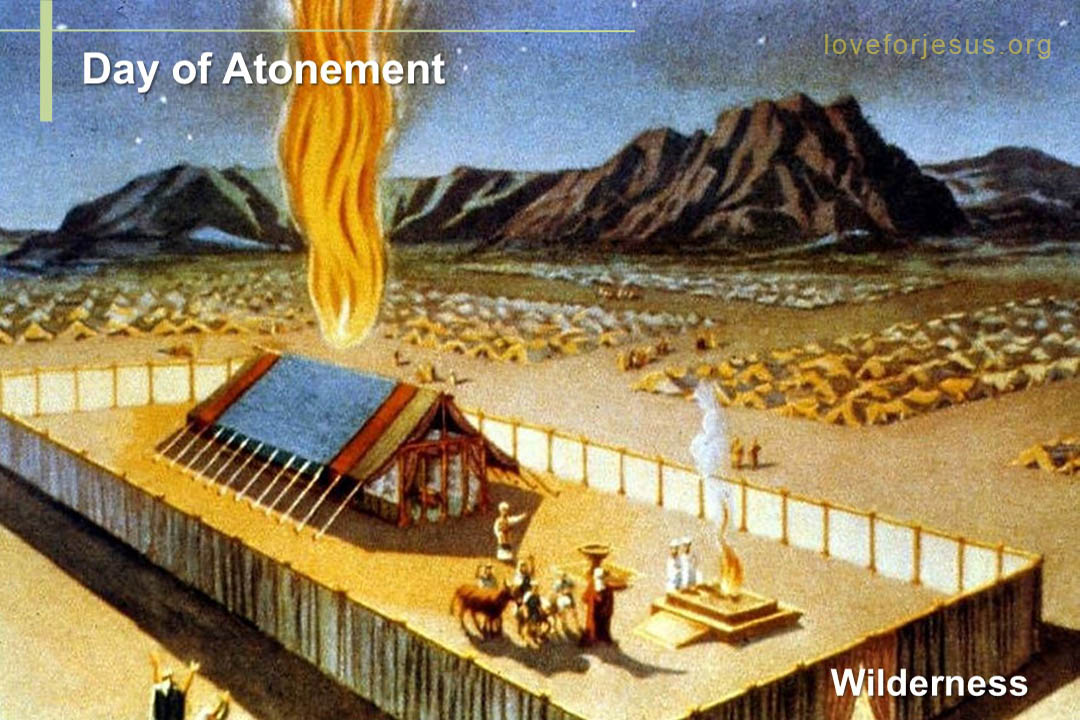
Sin separates man from God. The priests are the mediators between God and man. On the Day of Atonement, the High Priest must make atonement for the people to cleanse them from all their sins (Lev. 16:29-30). Only on this day each year could the High Priest enter the Holy of Holies before God and sprinkle the blood of the sacrifice on the Mercy Seat of the Ark of the Covenant to atone for the sins (Lev. 16:15) . The High Priest must then lay his hands on the head of a male goat, imputing the sins of the people to this lamb before sending it into the wilderness (Lev. 16:20-22) (see Precious Blood on the Mercy Seat). The ceremony of atonement foreshadows our High Priest, Jesus (1 Tim. 2:5), who bore the sins of the world (Isa. 53:6) and sanctified us by His blood on the cross (Heb. 13:12). He atoned for sins once and for all, so that we can all enter the Holy of Holies freely before God at any time (Heb. 4:16; 10:19-20).

God told Moses to build a tabernacle in the wilderness so that He could dwell among the people (Exod. 25:8-9). God commanded that the tabernacle and its objects must be built exactly according to the pattern He instructed, for it is the copy and shadow of the temple of God in Heaven (Heb. 8:5), pointing directly to Jesus' redemption and the New Jerusalem (Heb. 9:23-25, 28 ). The cloud of God rested above the tabernacle during the day, and at night there was fire in the cloud. Whenever the cloud was lifted from the tabernacle, the whole congregation set out (Exod. 40:36-38). This is how God walked with the Israelites in the wilderness for 40 years. God asked the people to live in booths for 7 days at the Feast of Tabernacles (Lev. 23:34, 39, 42-43). This foreshadows the Marriage Supper of the Lamb, and the New Heaven and the New Earth (Rev. 21:1-3).


